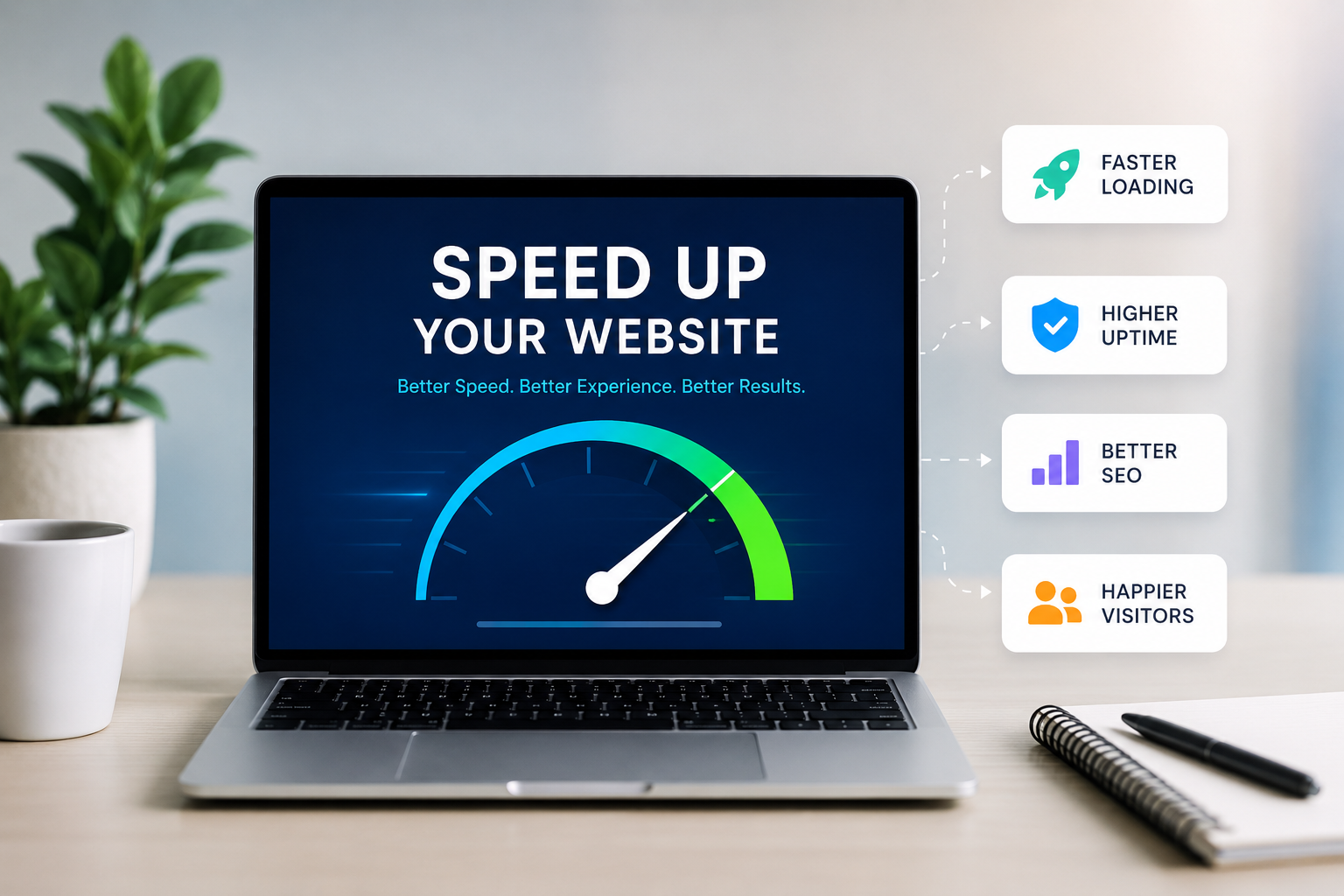
Why Website Speed Matters More Than Ever
Have you ever clicked on a website and left because it took too long to load?
You’re not alone. Modern internet users expect websites to load quickly. Even a delay of a few seconds can cause visitors to abandon your site and move to a competitor. Slow-loading websites not only affect user experience but can also reduce sales, lower search engine rankings, and damage your brand reputation.
Whether you run a small business website, an e-commerce store, or a corporate platform, website speed directly impacts your online success. Understanding what causes slow performance is the first step toward fixing it.
Let’s explore the most common reasons websites become slow and how the right hosting solution can make a significant difference.
Reason #1: Outdated or Slow Hosting Infrastructure
One of the biggest reasons for poor website performance is low-quality hosting.
Many website owners choose the cheapest hosting option available, only to discover later that their website struggles during traffic spikes and takes too long to load.
Common hosting issues include:
- Traditional HDD storage instead of NVMe SSDs
- Overcrowded shared servers
- Limited server resources
- Poor network performance
- Outdated hardware
Fast hosting providers use advanced NVMe-powered servers that can deliver significantly faster data access, helping websites load more quickly and perform consistently.
Reason #2: Heavy Images and Large Media Files
Images play an important role in website design, but oversized files can slow down page loading times.
Common mistakes include:
- Uploading high-resolution images without compression
- Using large video backgrounds
- Storing unoptimized media files
- Loading unnecessary graphics
A well-optimized website should balance visual appeal with performance. Compressing images and using modern file formats can dramatically improve loading speeds.
Reason #3: Too Many Plugins and Unoptimized Code
Many websites, especially WordPress sites, rely on plugins for additional functionality. While plugins can be useful, too many can negatively impact performance.
Warning signs include:
- Excessive plugin installations
- Duplicate functionality plugins
- Poorly coded themes
- Unnecessary scripts and stylesheets
Regular website maintenance helps identify and remove performance bottlenecks, resulting in a faster and smoother user experience.
Reason #4: Poor Database Performance
Your website’s database stores important information such as content, user accounts, product data, and settings.
Over time, databases can become cluttered with:
- Unused data
- Spam comments
- Temporary files
- Old revisions
- Excessive log entries
An unoptimized database forces the server to work harder, increasing page load times. Routine database optimization helps improve website responsiveness and overall performance.
Reason #5: Lack of Website Security and Resource Protection
Many website owners don’t realize that security issues can directly affect website speed.
Problems such as:
- Malicious traffic
- Bot attacks
- DDoS attempts
- Resource abuse
- Malware infections
can consume valuable server resources and slow down legitimate user requests.
Enterprise-grade security features help protect server resources and maintain website performance even during traffic spikes or attack attempts.
How Fast Hosting Solves Website Performance Problems
While website optimization is important, hosting remains the foundation of website speed.
A high-performance hosting environment provides:
Faster Storage Technology
NVMe storage offers significantly faster read and write speeds compared to traditional storage systems.
Better Resource Allocation
Quality hosting plans provide sufficient CPU, RAM, and bandwidth resources to handle traffic efficiently.
Improved Uptime
Reliable hosting minimizes downtime and ensures visitors can access your website whenever they need it.
Enhanced Security
Advanced DDoS protection and security monitoring help prevent performance issues caused by malicious activity.
Professional Technical Support
Experienced support teams can quickly identify and resolve performance-related issues before they affect your business.
At Site2Host, businesses benefit from the following:
- NVMe-powered hosting infrastructure
- Free website migration
- 99.9% uptime guarantee
- Enterprise-grade security
- 24/7 expert support
- Affordable plans starting from ₹375/month
- Cloud and hosting solutions under one roof
These features help businesses achieve faster loading times, improved user experiences, and stronger search engine visibility.
Frequently Asked Questions
How can I check if my website is slow?
You can use website speed testing tools to analyze loading times, performance scores, and recommendations for improvement.
Does website speed affect SEO?
Yes. Search engines consider page speed as a ranking factor. Faster websites generally provide a better user experience and can improve search visibility.
Can hosting alone improve website speed?
Hosting can significantly improve performance, especially if your current hosting environment is outdated. However, website optimization should also be part of the overall strategy.
What is NVMe hosting?
NVMe hosting uses advanced storage technology that delivers much faster data access compared to traditional SSD or HDD storage, resulting in quicker website loading times.
When should I upgrade my hosting?
If your website experiences slow loading times, frequent downtime, traffic growth, or resource limitations, it may be time to move to a more powerful hosting solution.
Your Next Step Forward
Website speed is no longer a luxury—it’s a business necessity. Slow websites can drive away visitors, reduce conversions, and negatively impact your search engine rankings. By addressing common performance issues such as poor hosting, oversized files, database inefficiencies, and security vulnerabilities, you can create a faster and more reliable online experience.
With over 25 years of industry expertise, Site2Host provides high-performance NVMe hosting, cloud solutions, professional email services, enterprise-grade security, and expert support designed to help businesses succeed online. Our reliable infrastructure, affordable pricing, and customer-focused approach make us a trusted partner for businesses across India and beyond.
With proven performance, dependable support, and industry-leading hosting solutions, Site2Host delivers the speed, reliability, and peace of mind your business deserves. Contact our team today and discover how faster hosting can transform your website’s performance.