


NVMe vs SSD: Which Storage Is Faster for Hosting?
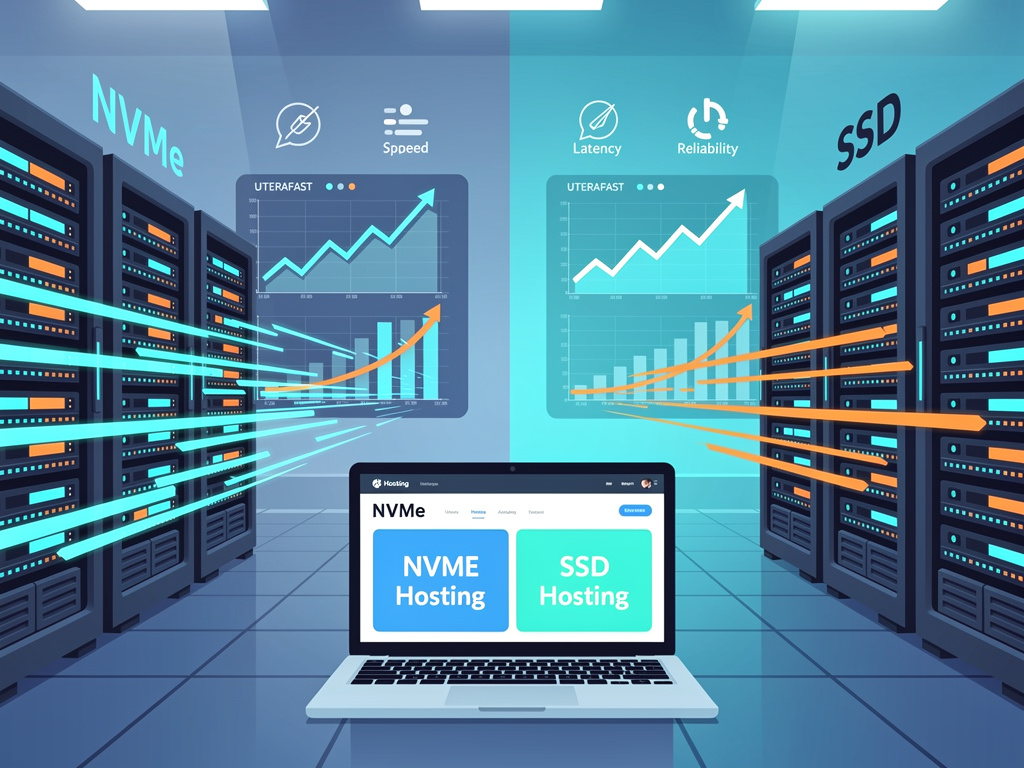
Website speed is no longer just a technical feature hidden behind the scenes. It directly affects user experience, search engine rankings, lead generation, and conversions. Even a small delay in loading time can reduce engagement and increase bounce rates. In today’s competitive digital environment, businesses cannot afford slow hosting infrastructure.
One of the most overlooked factors influencing website speed is the type of storage used by your hosting provider. While many hosting companies advertise “SSD hosting,” far fewer explain the major performance difference between standard SSD storage and NVMe technology.
For business owners, developers, and e-commerce brands, understanding this difference can help make smarter hosting decisions that improve both website performance and customer experience.
Understanding SSD Storage
SSD stands for Solid State Drive. Unlike traditional hard disk drives that rely on spinning mechanical disks, SSDs use flash memory to store and retrieve data. Since there are no moving components, SSDs are faster, quieter, more reliable, and more energy-efficient than older HDD technology.
When SSD hosting became widely available, it significantly improved website performance compared to HDD-based servers. Websites loaded faster, databases responded quicker, and overall server responsiveness improved dramatically.
Most standard SSDs connect through a SATA interface, which was originally developed for mechanical hard drives. Although SSDs perform well on SATA connections, the interface itself creates a speed limitation that prevents the storage from reaching its maximum potential.
What Makes NVMe Different?
NVMe, or Non-Volatile Memory Express, is a modern storage protocol built specifically for flash memory technology. Instead of relying on the older SATA interface, NVMe drives connect through PCIe, the same high-speed connection used for advanced graphics cards and high-performance computing hardware.
This direct PCIe connection allows NVMe drives to transfer data at dramatically higher speeds while handling far more simultaneous operations.
More importantly, NVMe was designed from the ground up for modern storage workloads. Traditional SSDs still rely on communication protocols originally intended for spinning disks, while NVMe removes those legacy bottlenecks entirely.
The result is significantly faster data access, lower latency, better multitasking performance, and improved responsiveness under heavy traffic loads.
Why NVMe Is Faster Than Standard SSDs
The difference in performance between SATA SSDs and NVMe storage is substantial.
A standard SATA SSD typically delivers read speeds around 500 to 600 MB/s. NVMe drives, on the other hand, can achieve speeds between 3,000 and 7,000 MB/s depending on the hardware configuration.
Beyond raw transfer speed, NVMe drives also handle vastly more input and output operations per second. This matters because hosting servers constantly perform thousands of small tasks simultaneously — loading files, querying databases, processing plugins, generating pages, and managing visitors.
With NVMe storage, servers can process these requests much more efficiently without creating performance bottlenecks.
Why Storage Speed Impacts Website Performance
Every time someone visits your website, your server performs multiple actions almost instantly:
- Retrieves website files
- Accesses database information
- Processes dynamic content
- Generates the webpage
- Sends the content back to the visitor’s browser
Storage performance influences every step of this process.
If the storage layer is slower, delays occur throughout the entire request cycle. As website traffic increases, these delays become even more noticeable.
For WordPress websites, WooCommerce stores, CRM portals, and database-heavy applications, faster storage can significantly reduce page generation time and improve overall responsiveness.
Even a one or two-second improvement in loading speed can increase user engagement, improve SEO performance, and reduce visitor abandonment rates.
NVMe Hosting and WordPress Performance
WordPress websites benefit heavily from NVMe storage because WordPress constantly interacts with the database and server storage.
Websites using:
- Multiple plugins
- Elementor or advanced page builders
- WooCommerce
- Membership systems
- Dynamic content generation
often experience better responsiveness and shorter loading times on NVMe-powered hosting environments.
Database queries complete faster, admin dashboards feel smoother, backups run more efficiently, and cached content can be served quicker during traffic spikes.
Better Performance During High Traffic
One of NVMe’s biggest advantages is its ability to handle concurrent operations efficiently.
When many visitors access your website at the same time, slower storage systems can create queues that delay requests and slow down the entire site.
NVMe storage handles far more simultaneous read and write requests, allowing websites to remain stable and responsive during peak traffic periods.
This becomes especially important for:
- E-commerce websites during sales
- High-traffic business websites
- Lead generation campaigns
- News or media websites
- Growing online platforms
Is HDD Hosting Still Worth Considering?
Traditional hard drives still exist in some low-cost hosting environments, but they are no longer ideal for modern websites.
Because HDDs rely on mechanical spinning disks, they are significantly slower than both SATA SSDs and NVMe drives. They also have a higher risk of hardware failure due to moving parts.
In 2026, businesses should strongly avoid HDD-based hosting for production websites unless the storage is being used purely for archival or backup purposes.
If a hosting provider does not clearly specify their storage type, it is always worth asking directly.
How to Check if a Hosting Provider Uses NVMe
Many hosting companies advertise “SSD hosting” without clarifying whether the storage is standard SATA SSD or NVMe.
When reviewing hosting plans:
- Look specifically for the term “NVMe”
- Check VPS and hosting infrastructure specifications
- Ask the provider directly if details are unclear
- Verify whether NVMe is included across all plans or only premium tiers
Storage speed is important, but it works best alongside optimized server resources, updated PHP versions, sufficient RAM allocation, reliable networking, and proper server-side caching.
Why Businesses Are Moving Toward NVMe Hosting
As websites become more dynamic and user expectations continue rising, businesses increasingly require hosting infrastructure that can deliver consistently fast performance.
NVMe hosting offers:
- Faster website loading times
- Better database responsiveness
- Improved user experience
- Stronger SEO performance
- Better handling of traffic spikes
- Lower server latency
- Improved application responsiveness
For growing businesses, this performance advantage directly supports customer retention and online growth.
Why Site2Host Uses NVMe Infrastructure
At Site2Host, all hosting and VPS environments are powered by NVMe storage technology. Rather than treating high-speed infrastructure as a premium upgrade, Site2Host uses NVMe as the standard foundation across its hosting ecosystem.
This approach helps businesses achieve faster load times, smoother website performance, and better scalability without compromising reliability.
From business websites and WordPress platforms to VPS deployments and e-commerce stores, NVMe infrastructure enables consistently high-performing hosting environments designed for modern digital demands.
Final Thoughts
NVMe is not simply another hosting buzzword. It represents a major advancement in server storage technology that directly affects website speed, responsiveness, and performance under load.
Compared to standard SATA SSDs, NVMe storage delivers dramatically higher throughput, lower latency, and far better multitasking capability. These improvements translate into faster websites, improved user experiences, and stronger business outcomes.
When choosing a hosting provider, storage technology should be one of the key factors you evaluate. Businesses investing in faster infrastructure today position themselves for better performance, stronger SEO visibility, and improved customer engagement tomorrow.
With high-performance NVMe infrastructure, scalable hosting solutions, and expert technical support, Site2Host helps businesses build faster and more reliable online experiences that support long-term growth.
With proven results, industry expertise, and reliable support, we consistently deliver outcomes that competitors cannot match. If you want an infrastructure that grows with your ambitions and never lets your visitors down, get in touch with Site2Host today.
📞 +91-88988 16336 | +91-97681 14582
📧 [email protected]🌍 www.site2host.com
Facebook
Twitter
LinkedIn
Email
Latest Post

September 17, 2026
September 10, 2026

August 29, 2026

Related Article
September 25, 2026
No Comments
September 25, 2026
No Comments
September 17, 2026
No Comments